← The curtain edit

The Ona size & styling guide

See the look.
Find your size.

Measure your rod and hanging height. Find target dimensions for a pair, or the quantity of 70″ wide single panels.

Find my size

All sizes are per panel. A pair contains two; wide singles are sold individually.
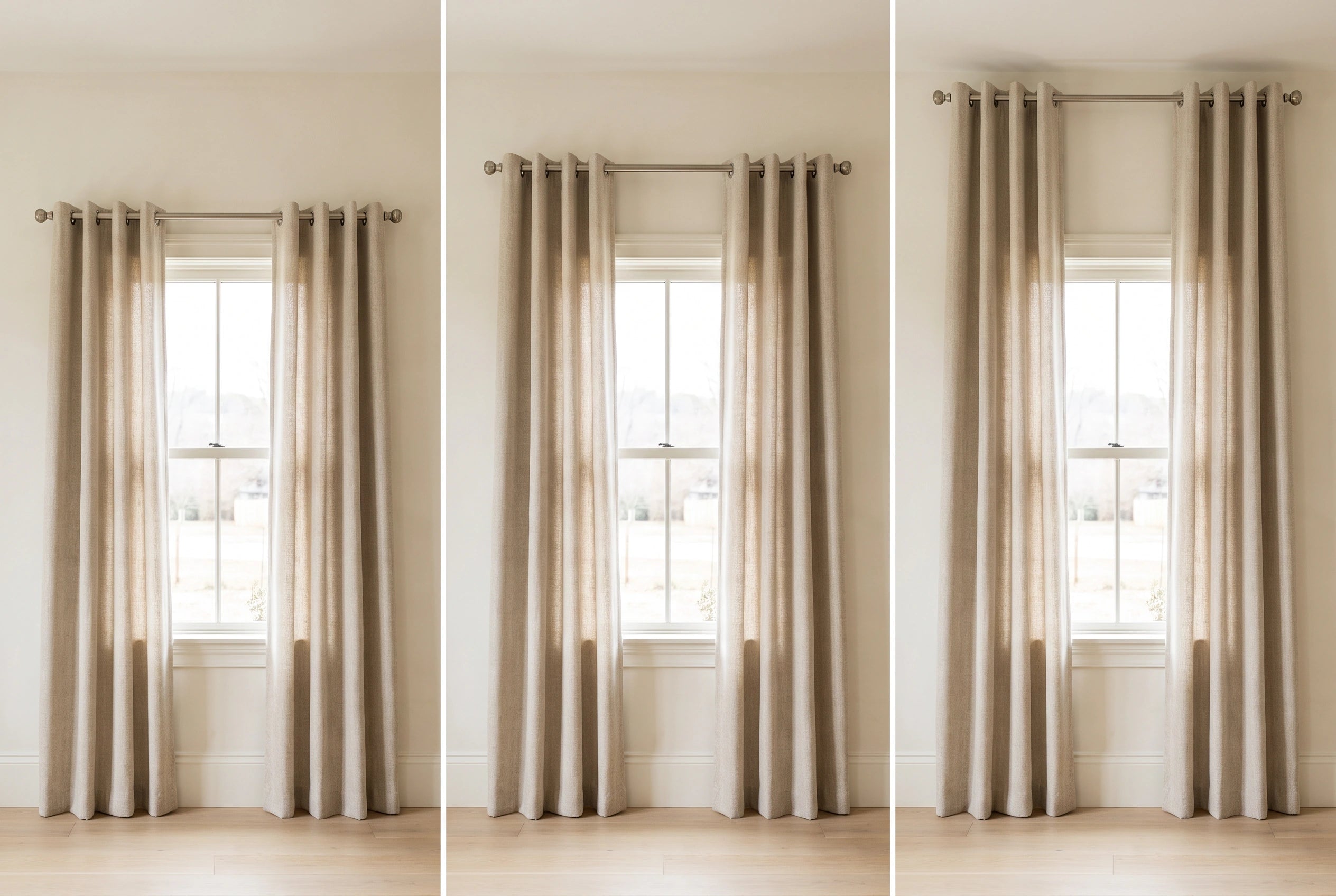
Three realistic curtain mounting heights compared in a warm ivory room
One window. Three ways to frame it.

Find your size.

Two curtain panels at 2 times the rod width in flat fabricA measures the usable rod from end to end, excluding decorative finials. Each flat panel is rod width times 2 divided by two. B measures fabric top to hem. Folds are illustrative.A · Rod widthB · Curtain length
2× rod width in total flat fabric. Rod measurement excludes finials.

1 pair · 2 panels · 2× fabric width

Choose a format and enter two measurements.

Example · 2× fullness

48″ rod width+96″ fabric top to floor→48″ × 96″ per panel · 1 pair

01 / Length & height

Choose a line you love.

Higher rods need longer curtains. Measure from fabric top to floor.

Classic curtain mounting example in an ivory room

Classic

A rod around 4–6″ above the frame gives a familiar, balanced line.

Start with 84″ or 96″ panels.

Dramatic curtain mounting example in an ivory room

Dramatic

Place the rod around 10″ above the frame for a taller, more elevated line.

Start with 96″ or 108″ panels.

Near the ceiling curtain mounting example in an ivory room

Near the ceiling

A high rod and a long panel create a continuous line from ceiling to floor.

Start with 108″ panels.

120″ is another option in selected back-tab styles.

Measure your room for the final fit. Lengths vary by style.

02 / Width & panels

See how many panels.

Choose 1×–3× the rod width in fabric; 2× is the default. Each listed width is for one flat panel.

A standard window with 2 panels · 1 pair of curtains

A standard window

2 panels · 1 pair

52″ wide per panel

Up to a 52″ rod at balanced fullness

The wide single option with 2 panels · 2 singles of curtains

The wide single option

2 panels · 2 singles

70″ wide per panel

Up to a 70″ rod at balanced fullness

A wide window with 4 panels · 2 pairs of curtains

A wide window

4 panels · 2 pairs

52″ wide per panel

Up to a 104″ rod at balanced fullness

These examples use the default 2× fullness. One 70″ panel covers up to a 35″ rod at 2×; two cover 70″; four cover 140″. Use as many singles as your rod and fullness need. Choose Wide single in the calculator above for the quantity.

How full should the folds feel?

We recommend 2× your rod width in total flat fabric.

Light folds curtain fold styling example
Light foldsLess gathered
Extra full curtain fold styling example
Extra fullMore gathered

Styling examples. Fabric and heading change the folds.

03 / The hem finish

A little space. Or a soft touch.

The last inch changes the feeling. Choose a clean float, a floor kiss, or a small, relaxed break.

Float: −½″ · Kiss: match your drop · Soft break: +2″

The detail that changes the drop

Match your starting point.

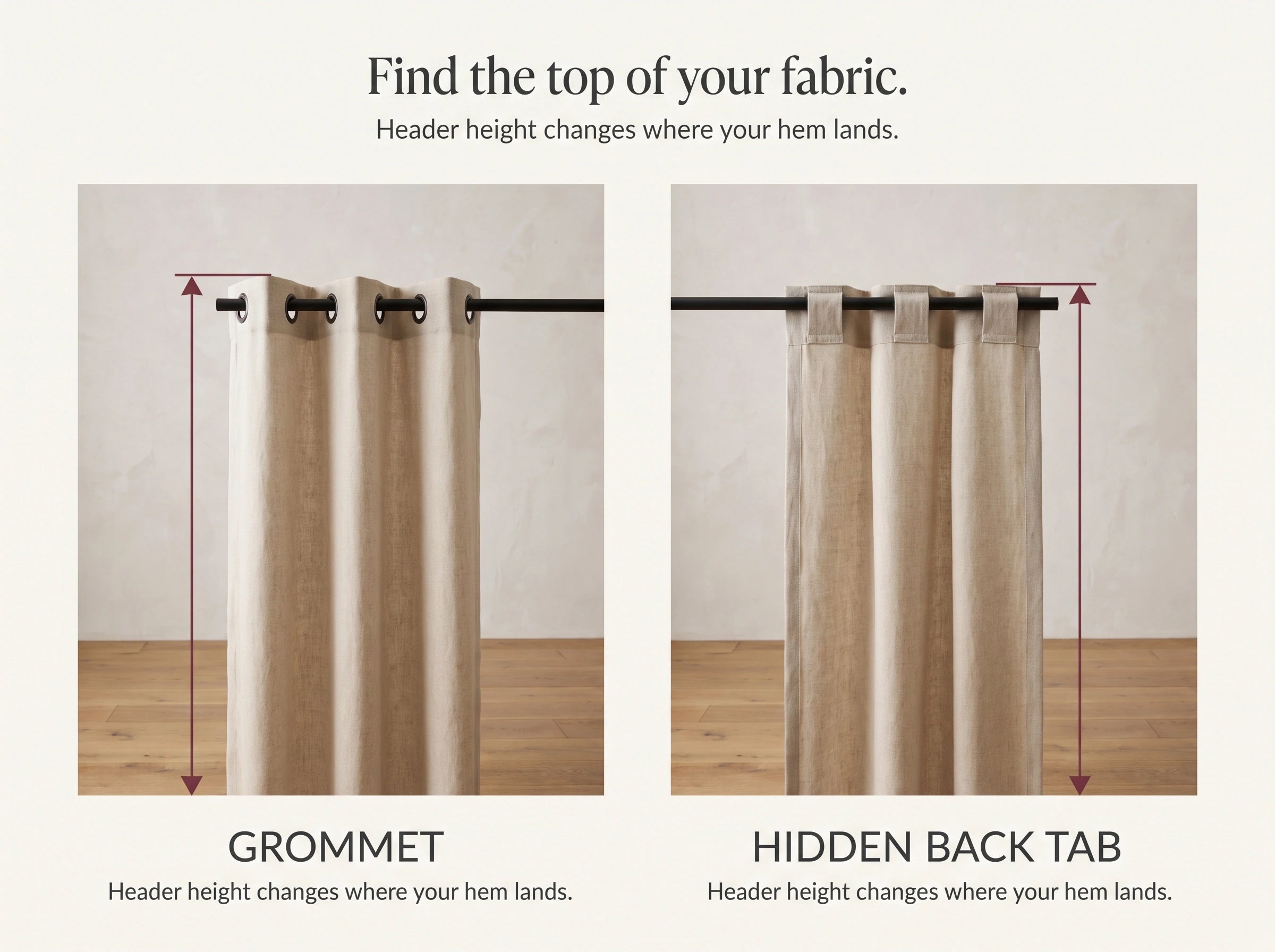
Grommets sit below the fabric top. Back tabs hold the rod behind the panel; a rod pocket encloses it. The fabric above the rod changes where the hem lands.

Measure the planned fabric top, then check how the selected product’s listed length is measured. Header offsets vary by style.

Explore the curtain edit →
Grommet and back-tab headings compared, with fabric-top measurement starting points marked.
Heading illustration. Check the actual header allowance for your style.

Before you order

The small things, answered.

Is the width for one panel or the pair?

Ona’s listed widths are per flat panel. A pair contains two panels of that size. A wide single contains one. Choose Pair for target dimensions for two equally sized panels, or Wide single to calculate how many 70″ panels you need. Wide singles can be combined; choose an even split if you want equal panels on each side.

Why doesn’t a 104″ pair cover a 104″ rod?

104″ is the total width with both panels flat. Folds use some of that fabric. At 2× fullness, a 104″ pair is a starting point for about a 52″ rod span.

What if my measurement falls between listed lengths?

The calculator gives your target dimensions. Compare them with the product’s listed sizes; allow for a different hanging height or suitable hemming if needed.

Can I use rings or clips?

Changing the attachment changes the hanging height. Include the ring or clip drop in your plan and check that the product and hardware are compatible. Do not add the same allowance to every heading.

Should the curtains rest on the floor?

A little extra length gives a relaxed look, but fabric on the floor collects dust and is less convenient for curtains you move often. A small float is easier for everyday use.

What should I check when installing?

Use the hardware maker’s instructions for bracket spacing, wall fixings, load limits and center supports. Leave clearance for radiators, vents, doors and nearby furniture. Steam or care for the fabric according to its label, then arrange the folds.

Illustrations show styling and measurement principles. Final fit depends on your measurements, hardware and the selected panel’s dimensions.